
In this article, InfoGreen covered our latest press release calling on the government to address shortcomings in the National Action Plan for a Sustainable Food System 2026–2030. Click here to read it.
News
Thrown away: Luxembourg’s food and political responsibility
Since Foodsharing Luxembourg started in 2019 we have been closely following the government’s approach to food loss and waste, regularly presenting our political demands for reducing it and monitoring what actions they have – or have not – taken. Whilst we welcome that the government has acknowledged the problem, the measures set out in the National Action Plan for a Sustainable Food System 2026–2030, presented on the 2nd of April, fall far short of what is required. Binding measures are crucial, when it seems the government is relying primarily on raising awareness. At this critical juncture we question why there is no political will to concretely tackle food loss and waste? Currently, there is a complete lack of a dedicated anti food waste law. This is not only unambitious but irresponsible.
The government’s awareness raising measures would, at best, meet the already insufficient targets of the EU directive on reducing food waste: a reduction of just 10% in production and 30% in retail, restaurants and households by 2030. Agriculture remains completely excluded. This is also in clear contradiction to Sustainable Development Goal 12.3, which aims to halve food waste in all sectors by 2030 – a target to which Luxembourg has also committed itself.
On 30 April, the government also rejected Motion 4542 by Joëlle Welfring against food waste, even though it was supported by the entire opposition. The arguments put forward by the governing parties during the debate on Motion 4542 in the Chamber reveal just how little awareness there is of the problem. Jeff Boonen claimed that raising awareness is sufficient, even though it has long been known that knowledge alone does little to change behaviour – a phenomenon known in behavioural research as the ‘attitude-behaviour gap’. Behavioural change takes time and resources. Yet it is precisely these that are lacking in times of multiple crises and growing social inequality. Luc Emering claimed there would be alleged negative consequences for supermarkets in France. There is no evidence to support this. On the contrary: the French law from 2016 demonstrably led to increased donations and reduced disposal costs, and now serves as an international model.
In times of global warming and resource scarcity, combating food loss and waste remains more urgent and important than ever. With around 10% of global greenhouse gas emissions [1], food waste causes three times as much pollution as the entire global aviation industry [2]! At the same time, a third of food is thrown away. This means wasted working hours, water, transport and fertiliser.
The solutions have long been available, but the government refuses to implement them. Mandatory donations of food that are still fit for consumption in retail and production are already in place in France, Finland and the Czech Republic. Alternatively, donating businesses could be exempted from liability in order to increase donations, as is the case in Italy. Other effective measures include mandatory price reductions for food nearing its best-before or use-by date, as well as for goods that are not visually perfect, a ban on all-you-can-eat offers, mandatory discounts on pre-orders, and improvements to the reusable food container system.
Since our creation, Foodsharing Luxembourg volunteers have saved 1000 tonnes of food from the bin, which is a drop in the ocean of what could be done. With every year that passes, tonnes of food, resources and climate protection are lost. What is lacking is not knowledge, but political will. And that is precisely where this government is failing.
—
[1] IPCC Special Report on Climate Change and Land, August 2019 (Chapter 5)
[2] Lee, David S., et al. “The contribution of global aviation to anthropogenic climate forcing for 2000 to 2018.” Atmospheric environment 244 (2021): 117834.
Special Article in Luxembourg Times
15/02/2026
In this detailed article, Luxembourg Times covered how Foodsharing is making an impact by reducing food waste in Luxembourg. Click here to read it.
Article in Luxembourg Times
03/11/2025
In this detailed article, Luxembourg Times covered Foodsharing and other initiatives designed to eliminate food waste in Luxembourg.
Foodsharing kept 164,400 kg of edible food out of the bin in 2025
In 2025, Foodsharing Luxembourg continued and strengthened its commitment to fighting food waste thanks to an increasingly active community. Today, the non-profit organization has 306 volunteer Foodsavers, united by a common mission: to save food that is still perfectly edible but destined to be thrown away
Many people are unaware that most products carry a ‘best before’ date, which indicates quality rather than safety. In many cases, food can still be consumed well beyond this date without any health risk. Yet nearly 30% of food produced is still thrown away. It was in response to this situation that Foodsharing Luxembourg was created, with the aim of preserving the planet’s resources and taking concrete action against climate change by reducing food waste.
To carry out this initiative, Foodsharing now collaborates with 62 cooperations and partner stores across the country in the Foodsaving project. These partners share unsold food that is still edible, which is then collected by volunteer members. We are proud to work with partners that understand the significant impact of food waste on our climate, environment, and society. The quantities saved vary greatly: they can range from small collections of 2 kg to more than 20 kg in a single collection from a large retailer.
Saved food can also be dropped off at one of the country’s 3 official Foodsharing Points, which are accessible to everyone free of charge, in accordance with strict hygiene rules. These points are located in Differdange, Esch-sur-Alzette, and Lintgen, and allow food to be made available for free, with no conditions attached.
Foodsharing Luxembourg relies entirely on volunteers. Each member gives their time and energy to keep this solidarity network alive. The results alone in the Foodsaving project speak for themselves:
👉 In 2025, nearly 164.400 kg of food was saved across Luxembourg.
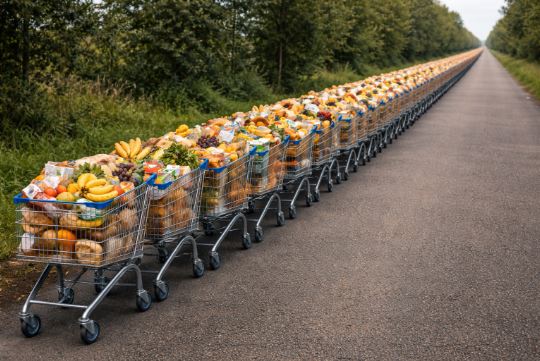
👉 Since 2019, Foodsharing Luxembourg has rescued more than one million kilograms of edible food. At an average of 50 kg per supermarket trolley, that represents a 20-kilometre line of fully loaded trolleys.
Beyond its daily rescue efforts, the non-profit organization also works to change the legislative framework in Luxembourg. Foodsharing advocates in particular for:
- a mandatory discount of at least 30% on products approaching their best before date or expiry/use-by date in the next 3 days,
- the sale at reduced prices of “ugly” fruit and vegetables that are perfectly edible,
- the obligation for businesses to donate food that is still edible,
- and greater awareness of anti-waste food practices at the national level.
We can all make a difference by changing a few everyday habits to reduce food waste. And if you’d like to take action even further, Foodsharing Luxembourg is always open to welcoming new motivated members.
You can also take part in one of the free zero-waste meals organized every month by Foodsharing members. The next one will take place on Sunday, January 25 at La Mesa – Maison de la transition in Esch-sur-Alzette.We would like to thank all the volunteers, active foodsavers, and partners for their commitment, motivation, and essential contribution to the fight against food waste in Luxembourg.
Tips to Reduce Food Waste at Home
Everybody can start stopping food waste at home. And there will be two side effects: Saving money & Making Positive Impact! By taking small steps at home, you can directly reduce your personal environmental impact while contributing to the fight against climate change.
Use your refrigerator properly
Do not just shove food inside your refrigerator. Place it with care. The top shelf is the coldest place. Put raw meat and fish there. Use the bottom drawer only for vegetables. Keep eggs and butter in the door. Every item has a proper home, and if you put it in the right zone, it stays fresh. It does not rot.
Trust Your Nose, Not the Date
A date is just a number, at least in this context! “Best before” does not mean “poison after.” It is only about the taste, not the safety. When the date passes, do not panic. Look at the food, smell it, and taste a little bit. Your senses tell you the truth. If it smells good, eat it. Do not let a stamp decide for you. “The best-before date is not scientifically a use-by or expiry date. Many foods remain edible for a long time—we need to learn to use our senses again.” says Irina Simoncini, a biochemist, research and development expert for Microtarians, Luxembourg.
The Second Life of Food
Leftovers are not trash. They are ingredients. Do not scrape your plate into the bin. Go online and search for “zero-waste recipes” from experts like Jamie Oliver or BBC Good Food. You can turn old bread into a new meal. You can turn wilted vegetables into soup. Save your money. Save the food.
Stop Waiting. Start Moving.
Do you still feel lost sometimes? Do you stare at the label and feel confused? That is normal. We are all humans, we all make mistakes. But do not let confusion stop you. Guilt does not help the planet. Action does. Do not try to be perfect, just try to be better. Here are some common barriers and our markers to help you:
“I don’t have time to make a plan.”
Use a shopping list app such as Bring! or Listonic to make planning easier and less stressful.
“I plan too much—there’s always something left over.”
Make a weekly plan with simple dishes that saves time and reduces waste.
“I don’t know how to store things properly.”
Use visible boxes and sort new food behind existing food in your refrigerator to ensure older items are used first. The USDA FoodKeeper app provides tips for shelf life and storage.
“I thought it was no longer good.”
Use your senses: look, smell, and taste. The best-before date is not a throw-away date. Check the USDA FoodKeeper app or Too Good To Go for specific food storage guidance.
“I can’t use up leftovers.”
Use the app My Fridge Food for easy leftover recipes with a search function. You can also:
- Cook a weekly leftover day where you prepare meals from what you have
- Garnish with spices, herbs, or dips
- Turn them into a casserole, soup, or smoothie
“It doesn’t look appetizing anymore.”
Get creative! Repurpose food through:
- Composting food scraps
- Fermenting surplus food instead of throwing it away
- Freezing items for later use
- Adding garnishes, spices, and herbs to make dishes more appealing
“I can’t see what’s at the back anymore.”
Organize your refrigerator properly with these tips:
- Keep visible boxes to store items
- Always place new food behind existing food to follow the FIFO (first in, first out) principle
- Label and date containers
- Use the apps USDA FoodKeeper or Too Good To Go for storage guidance
Knowledge Protects Against Waste
Those who know where food comes from and how it is made, waste less. Food education builds appreciation and helps avoid waste. Consider learning about:
Fermentation: With a little salt, water, and time (and no electricity), you can extend the shelf life of food and preserve both taste and nutrients.
Seasonal foods: Eating seasonally reduces waste and supports local producers
DIY preservation techniques: Learn how to freeze, pickle, or preserve surplus food
Get More Involved
If you have already taken your first small step at home, and you are interested in expanding your impact beyond your household, Foodsharing Luxembourg offers several ways to get involved:
- Join our Foodsaving project to pick up and redistribute edible food from businesses that would otherwise be thrown away
- Use our Foodsharing Points to share surplus food with your community for free
- Support us financially if you’d like to contribute to our mission
This page incorporates research and tips from Foodsharing Luxembourg, the European+ project “Waste Less, Taste More” traveling exhibition, developed by foodsharing e.V. (Germany), Microtarians SIS (Luxembourg), and IDELUX Environnement (Belgium) as part of the EU Erasmus Adult Education Program.
Stop Food Waste: Share and Save Fruits with Kierfchen.lu

Photo credit: kierfchen.lu
A free online platform is helping Luxembourg residents rescue traditional orchard fruit from going to waste while building community connections.
What is Kierfchen And Why it Matters
Until the middle of the 20th century, meadow orchards were the main source of fruit throughout Luxembourg. Today, most of this locally grown, unsprayed fruit goes unharvested and unused. In response to this challenge, the online platform ‘Kierfchen’ was developed by Natur & Geopark Mëllerdall. The project is financed by the Ministry of the Environment, Climate and Biodiversity, with the goal of encouraging the use of this fruit and actively counteracting food waste at the local level. It is an interactive platform aiming to make it easy for anyone to share, find, or use orchard resources so that valuable fruit is consumed by our local communities.

How It Works
The main goal of kierfchen.lu is to bring together everyone involved with orchard meadows and related local food networks. It uses a free, interactive map to connect people across the country. Since Spring 2025, the map covers the entire country. Now, residents anywhere in Luxembourg can post listings or browse offers. Whether you have a single apple tree in your garden or manage a community orchard, you can participate. The platform connects people who have surplus fruit with those searching for local produce, creating a direct link between supply and demand.
Who Can Join
Anyone can use kierfchen.lu. No special qualifications are required. Smallholders, orchard owners, community groups, home gardeners, restaurants, and residents are all welcome! If you are looking to harvest, share, buy, swap, or collaborate around orchard fruit and related resources, this platform is for you. Even individuals with just one tree are encouraged to get involved and help reduce waste while strengthening local food networks.
What You Will Find on the Map
The platform hosts a wide variety of listings beyond just fruit. You will discover fruits and nuts available for harvest or purchase, regional producers, restaurants sourcing local ingredients, beekeepers, livestock keepers, harvesting equipment for loan or rent, conservation advice centers, and upcoming events. Kierfchen.lu also promotes the ‘Gielt Band’ campaign from the Ministry of Agriculture, where trees marked with a yellow ribbon signal that the fruit may be harvested by anyone. It is a one-stop resource for everything related to Luxembourg’s orchard landscape.
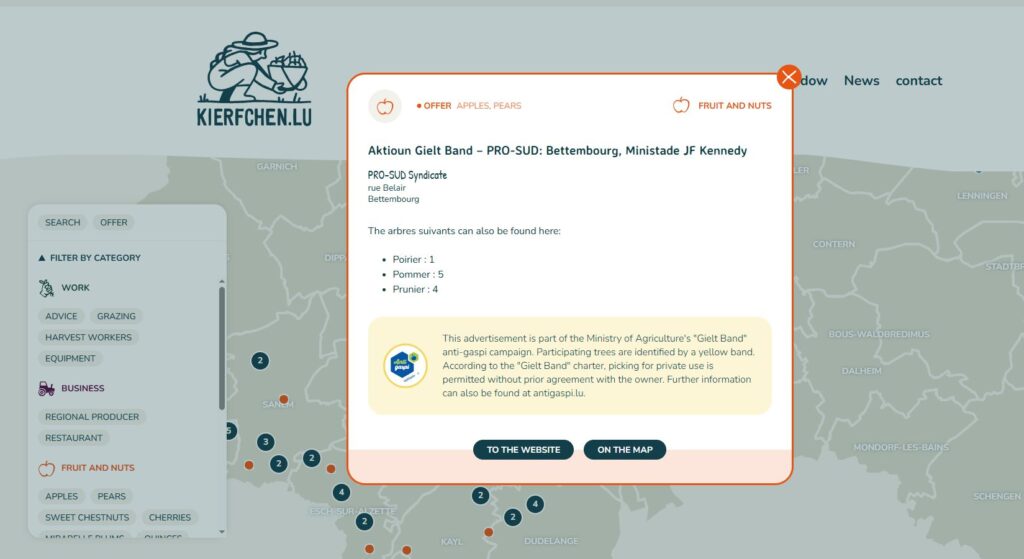
Currently, the platform is available in German, with translations into other languages in progress.
How to Get Involved
Ready to make a difference? Here’s how you can start:
Post your tree or harvest offer: Have surplus fruit? Let others know by adding a free listing to the map.
Search the map for nearby listings: Whether you are looking for apples, plums, or beekeeping space, explore what is available across Luxembourg.
Share the platform with your network: Help neighbours and friends discover kierfchen.lu through social media and word of mouth.
This article is based on a conversation between Shashi Bhushan (Web Editor for Foodsharing Luxembourg asbl) and Julie Plumer (Chargée du projet, Natura 2000 verbindet, Natur & Geopark Mëllerdall).
International Day Against Food Waste – 29th September
Luxembourg, 29th September 2025
Today marks the International Day of Awareness of Food Loss and Waste, a moment to reflect on one of the most pressing social and environmental challenges of our time.
Food loss and waste occur when perfectly edible food is discarded along the supply chain – from farms to supermarkets to households – instead of being consumed. This results not only in a waste of valuable resources such as water, labour, energy, and land, but also contributes significantly to climate change.
Globally, one third of all food produced is never consumed. In Luxembourg, the food loss and waste represent 122 kilograms per person per year. According to Eurostat (2022):
- 65 kg come from households,
- 18 kg from manufacturing,
- 15 kg from restaurants and services,
- 13 kg from retail and distribution,
- 12 kg from primary production.
Private households are in fact responsible for 53 % of food waste in Luxembourg.
On this occasion, Transition Minett and Foodsharing Luxembourg, two Luxembourg-based associations active in the fight against food loss and waste, would like to encourage collective action across society – from citizens to businesses to institutions. We believe that a national framework could help strengthen these efforts and ensure Luxembourg is aligned with international commitments, while paving the way for a sustainable and fair food system. Luxembourg aims to divide by two food waste by 2030 according to the website of Antigaspi, both in shops and restaurants and by consumers, but it still lacks a clear strategy on how to reach this goal.The website Antigaspi offers practical tips on how to reduce food waste at home: https://antigaspi.lu/rotschlei/
A strong call for fair and resilient agriculture
🌱 On June 30, 2025, the Meng Landwirtschaft platform and its 19 member organisations, including Foodsharing Luxembourg, presented the 4th, fully revised edition of their plea for a thorough overhaul of agricultural policy, near the 2,000 m² field at the Maison vun der Natur.
🎯 Objective: To stimulate public debate on the future of agriculture in Luxembourg and actively contribute to it. Meng Landwirtschaft calls on Luxembourg’s political leaders—at both the national and European levels—to build a sustainable framework for agriculture that is no longer solely subject to competition law, but recognised as a social, ecological, and public-interest pillar.
📢 Another agriculture is possible: fairer, more resilient, and inclusive!
👉 Learn more: Advocacy for a fair and resilient agricultural policy
What if all food were consumed and no food were wasted?
Foodsharing Luxembourg contributed to the July edition of the CIRCLE OF LIFE series organised by microtarians SIS on Sunday the 6th of July in the frame of LUGA. Due to the bad weather, this edition was relocated from the urban farm Kuerbebierg to the Quartier Stuff Grünewald.
Besides providing rescued foods and giving a hand, we contributed with a participative discussion round with the title “What if all food were consumed and no food were wasted?”.
Let’s imagine we are in the year 2030. Food loss and waste are issues of the past. How did we manage to do so? How does every sector look like now?
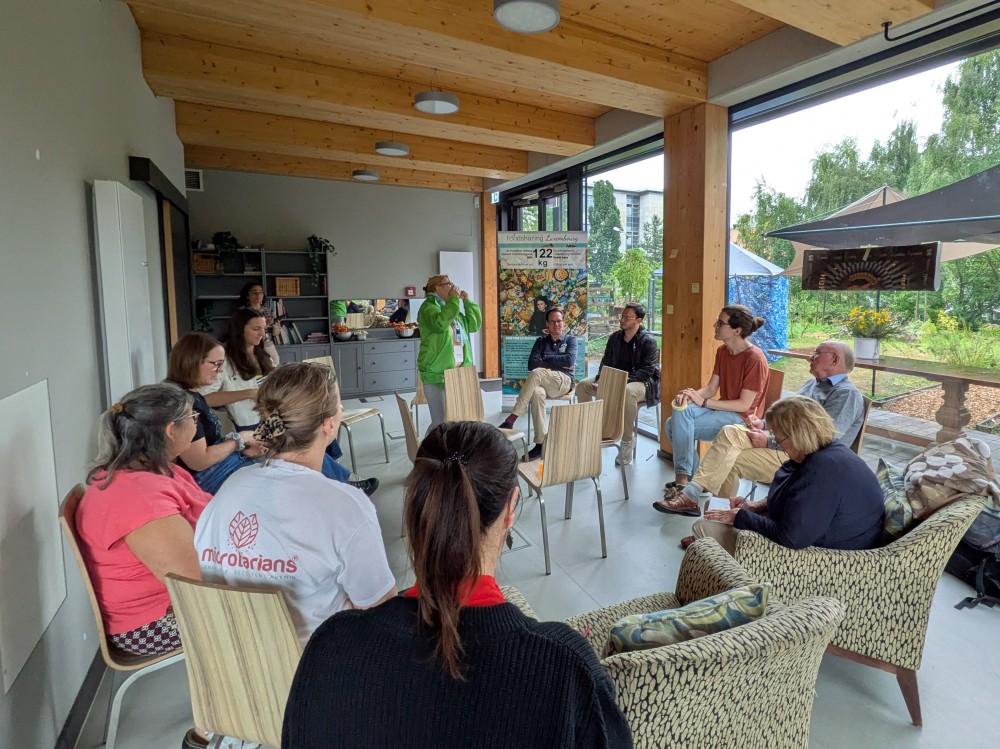
After an imagination exercise and a collective topic identification, we had a fishbowl conversation, which most participants used to actively join the discussion, giving everyone in the room a chance to contribute. The invitees Hannah Proffitt-Perchard, Pauline Seeburger and Stefania Filice got the discussion started. The whole session was facilitated by Daniel Waxweiler.
The collective topic identification resulted in a wall of post-its with topics, which were clustered according to categories that emerged naturally. Improvements along the whole production chain were collected, and the role of regulations was highlighted. Raising awareness with young people was another bigger cluster.
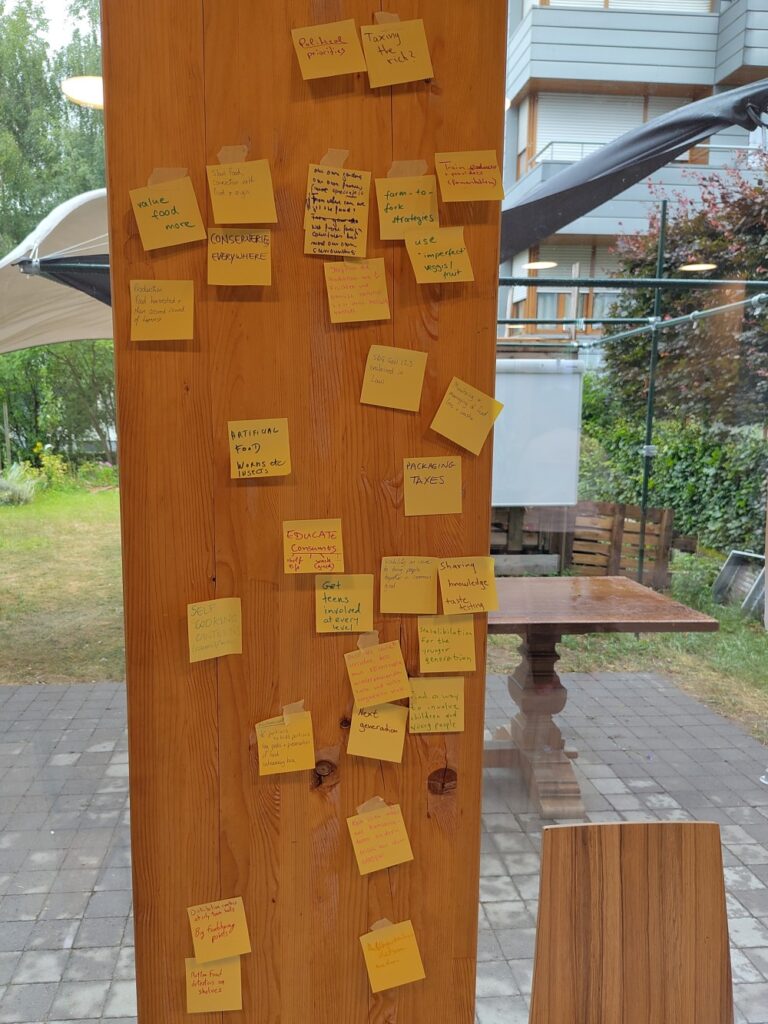
In the following discussion round, we started by talking about how accessible an organic or local diet is and how gardens could be made more accessible for everyone by communes. Then, we wondered why many people don’t prioritise conserving food. Is food too cheap? Or was the knowledge lost? This lead us to talk about how children get in touch in some places already more with how their food grows and how it can be transformed. We also shifted our attention to how to help people to waste less. Could rewards work even better than punishments at the individual level? Too what degree could technological solutions help? We closed this round by reminding us that creating communities is essential for solving the issue from the bottom-up.
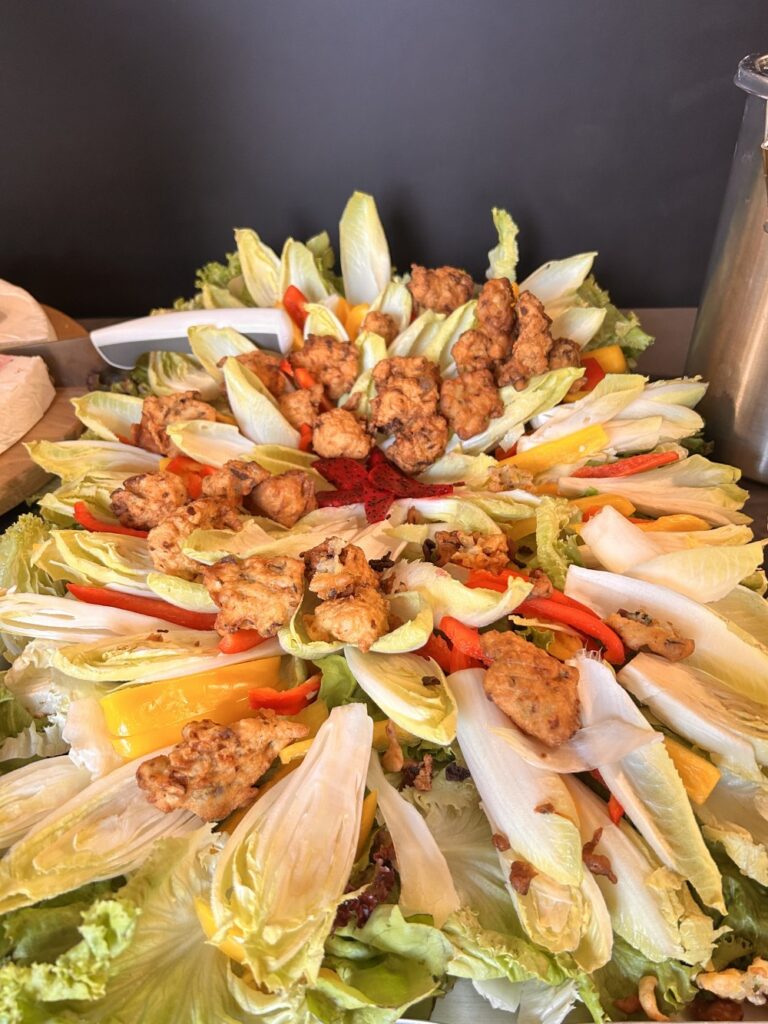
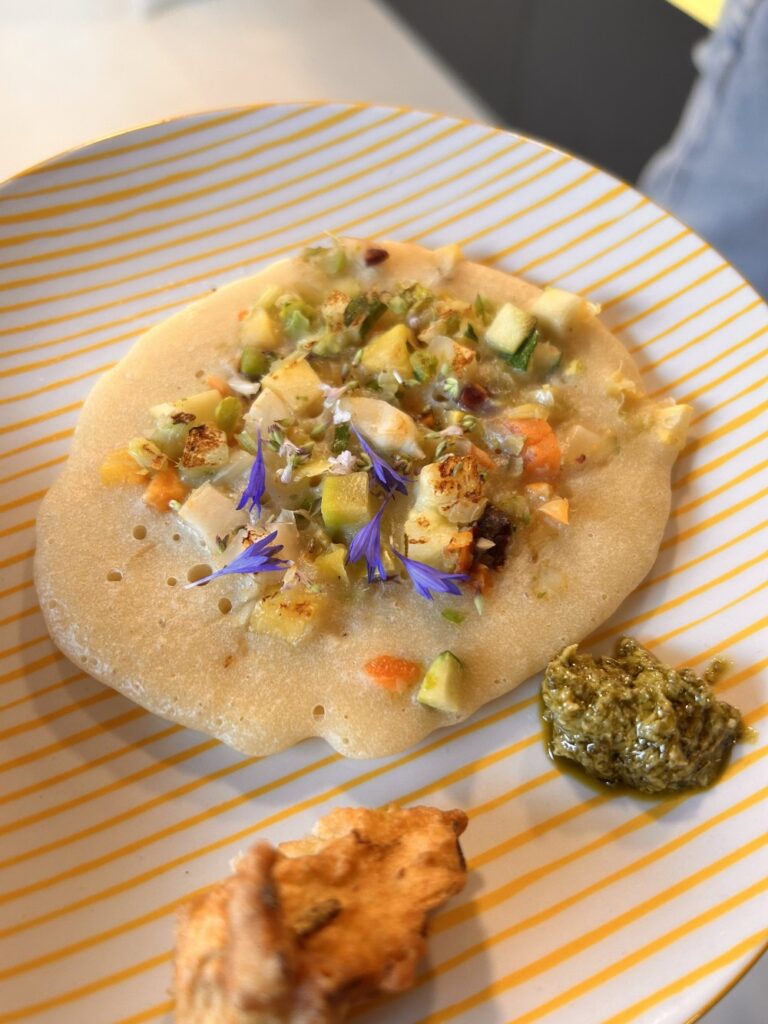
After that, we collectively enjoyed the food based on rescued vegetables and fruits and on fermented surprises by microtarians.
And how do you image the future?